Publication Design · Typography · Riso Print · 2022

Romantic
vs.
Modernist

A 16-page Riso-printed typography book that explores two of Robert Bringhurst's type classifications — dramatizing their differences through letterform anatomy, color overlays, and Swiss-modernist composition.
16 Pages
2 Classifications
Riso Print Method
Type Classification Book cover — Romantic vs Modernist Geometric
01 — Concept

Two classifications, one dialogue

This publication expresses two of Robert Bringhurst's type classifications — Romantic and Geometric Modernist — in conversation with each other. Each spread highlights the visual DNA of one classification, isolates its features, and sets them against the other, so readers can see the philosophical gap between them at a glance.

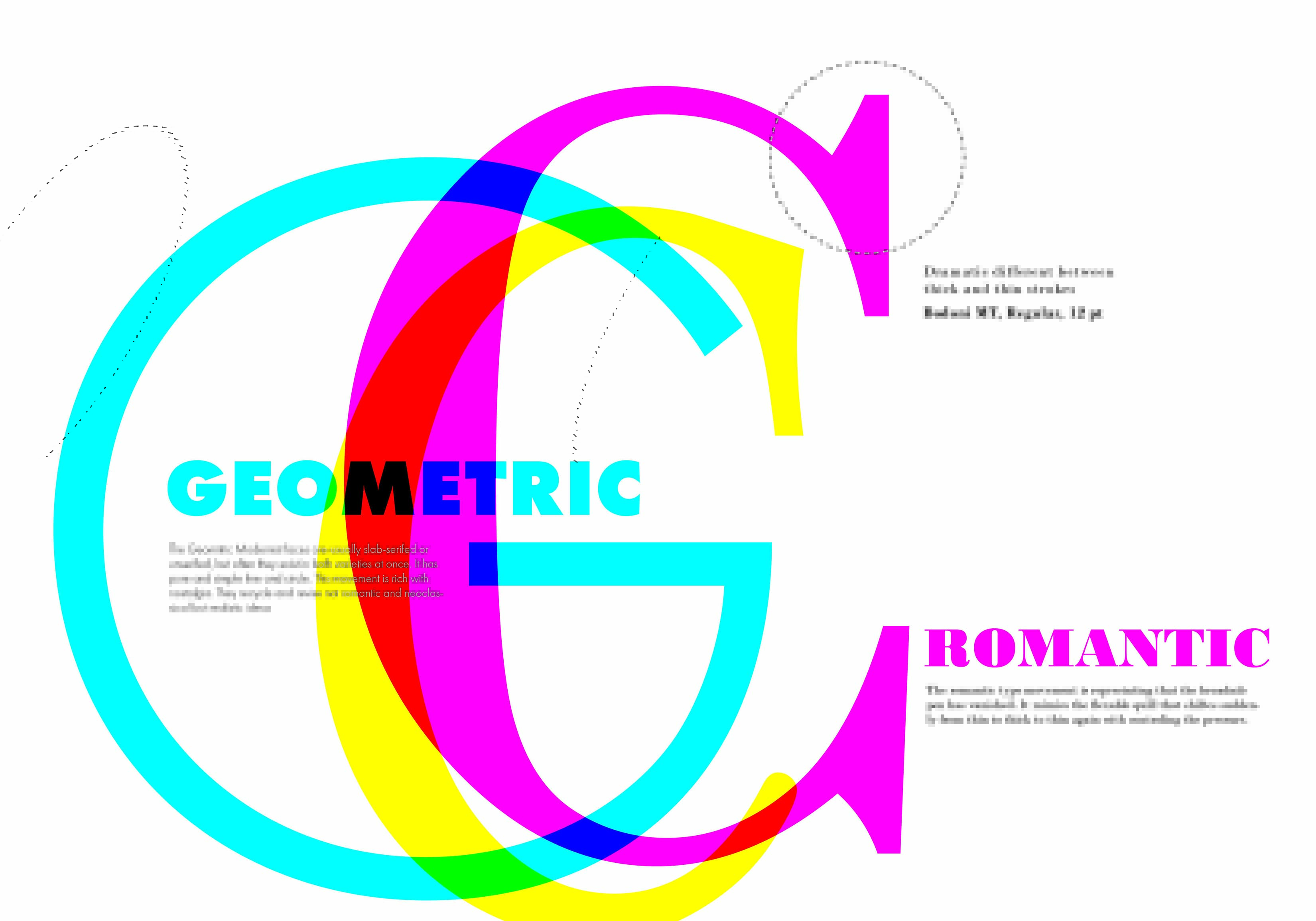
The book was designed as a 16-page Riso print, with a Swiss-modernist grid and a CMYK-forward palette. Overlapping letterforms in cyan, magenta, yellow, and black imitate the print registration and color separation process itself — turning the medium into part of the argument.


02 — The Classifications

What sets them apart

Bringhurst's classifications aren't just stylistic labels — they encode different histories, different tools, and different ideas about what a letter is for.

Classification One

Romantic

The Romantic type movement represents the moment the broad-nib pen has vanished. It mimics the flexible quill that shifts suddenly from thin to thick and back, controlled by pressure. Influenced by Neoclassicism in 18th- and 19th-century Europe, these letters look more like drawing than writing — rationalist in axis, dramatic in execution.

  • High contrast Thick / Thin
  • Sharp strokes Cut edges
  • Vertical axis Rationalist
  • Reduced aperture Closed forms
  • Rounded terminals Drop endings
  • Thinner serifs Flat, horizontal
Bodoni · Didot Giambattista Bodoni, Parma, Italy 1803–1812 · Firmin Didot 1799–1811
Classification Two

Geometric Modernist

Geometric Modernist faces are usually slab-serifed or sans-serifed — often both at once. The movement is built on pure line and circle, rich with nostalgia, recycling and revising realistic rather than romantic ideas. The character of each letter comes from text figures, small caps, large apertures, delicate modeling, and a careful balancing of form.

  • Low contrast Uniform strokes
  • Pure geometry Lines & circles
  • Large aperture Open forms
  • Delicate modeling Balanced weight
  • Text figures & small caps Typographic detail
  • Slab or sans serif Or both
Futura Paul Renner, 1924 · Bauhaus-era Germany

03 — Cover & Introduction

Setting the stage

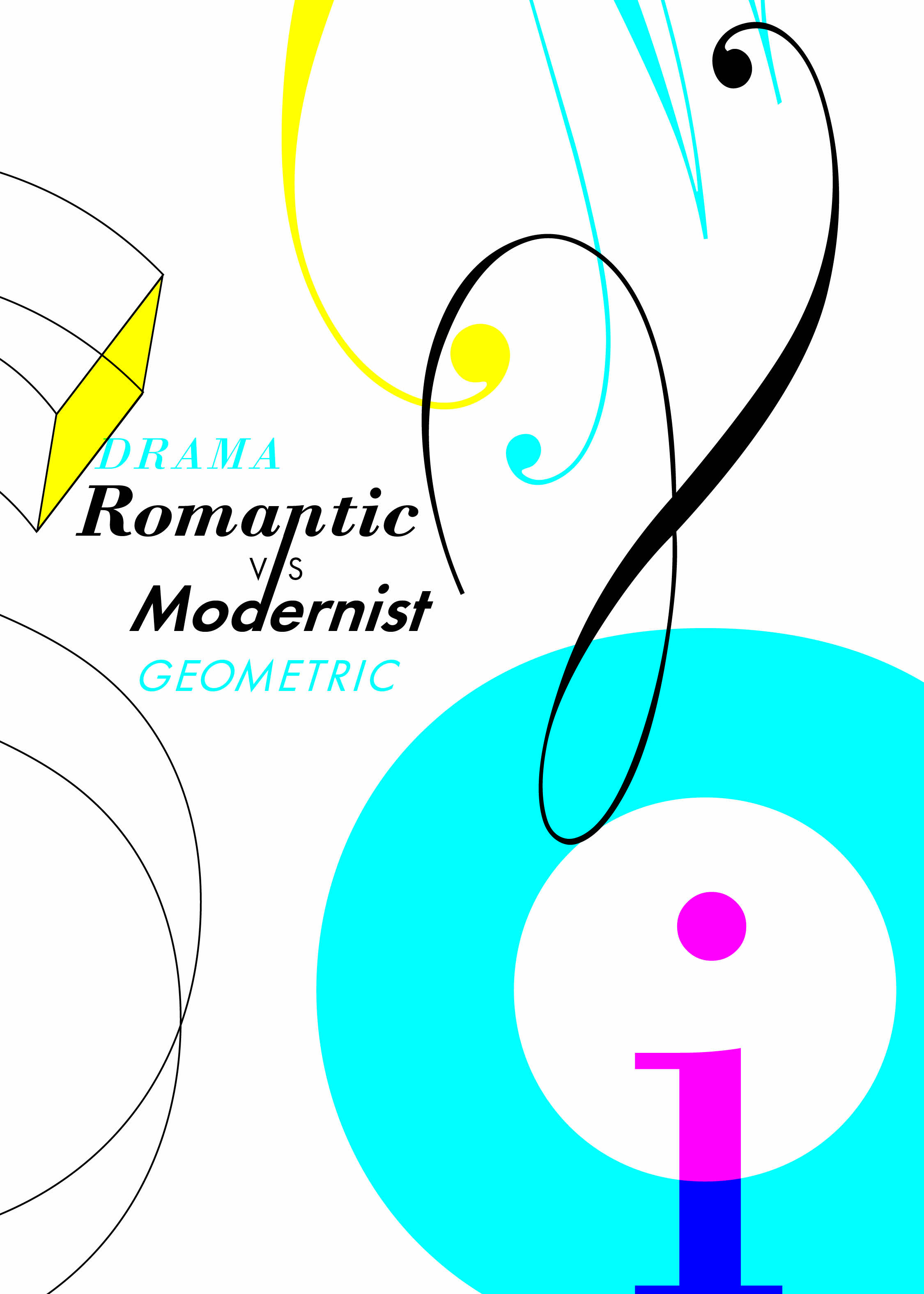
The cover introduces the tension between the two classifications as a single typographic composition — a Bodoni "Romantic" meeting a sans-serif "Modernist" meeting a kinetic script, all held together by CMYK construction lines and geometric anchors.

Book cover — Romantic vs Modernist Geometric
CoverThe opening statement — Drama, Romantic, vs, Modernist, Geometric
Opening spread — overlapping G letterforms in cyan, magenta, yellow
Opening SpreadOverlapping Bodoni G's in CMYK — print separation as argument

04 — The Romantic Spreads

Bodoni, dissected

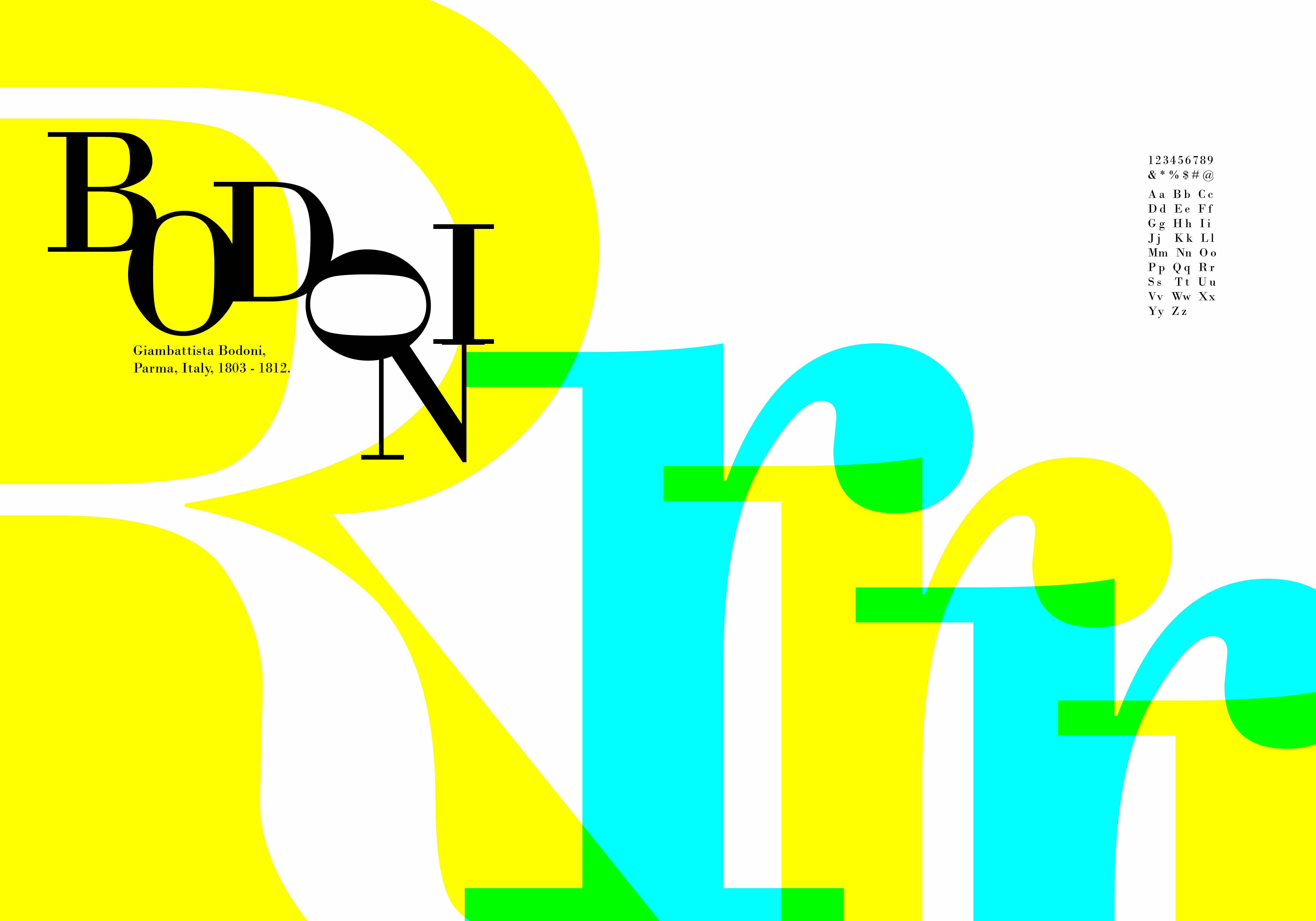
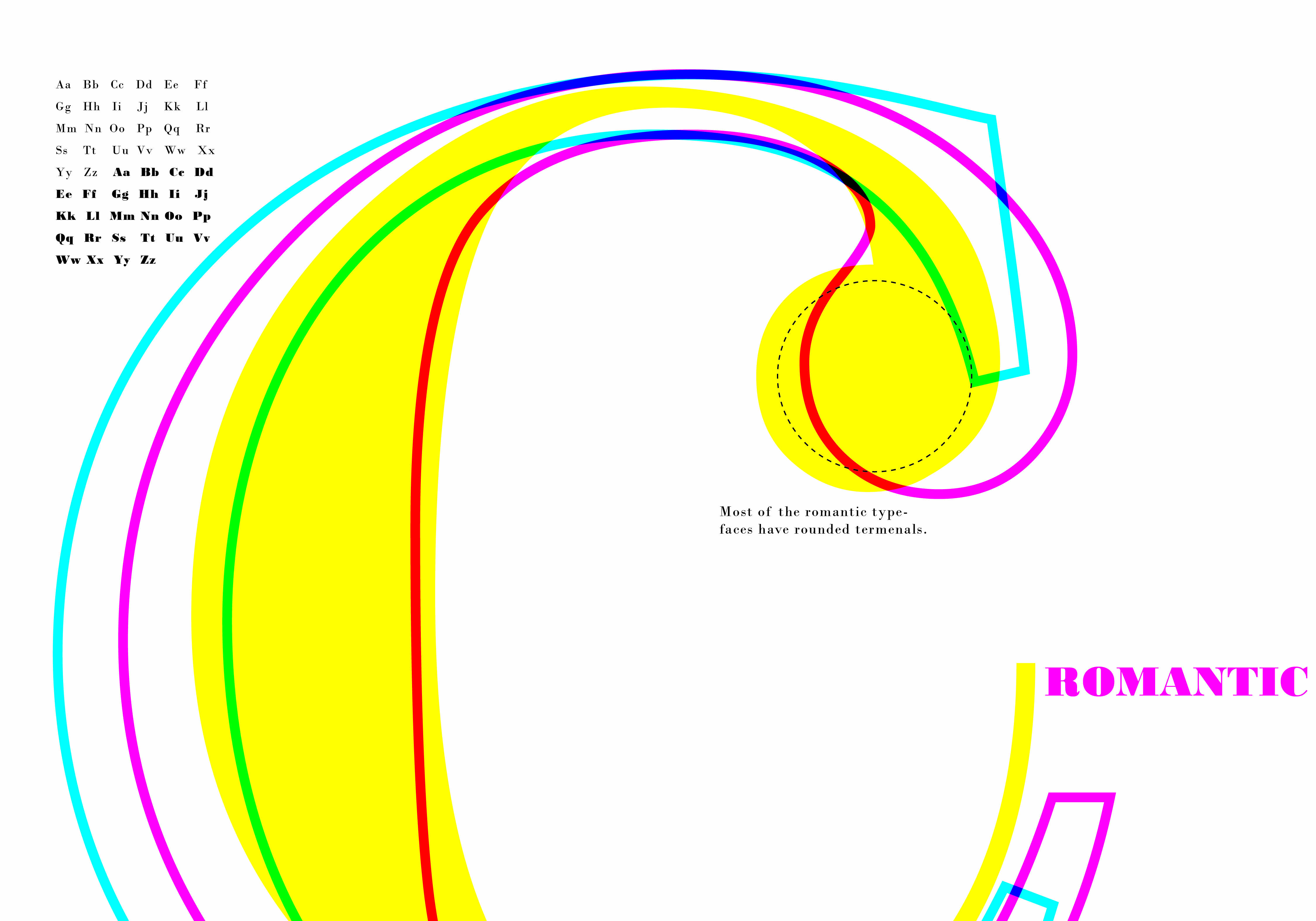
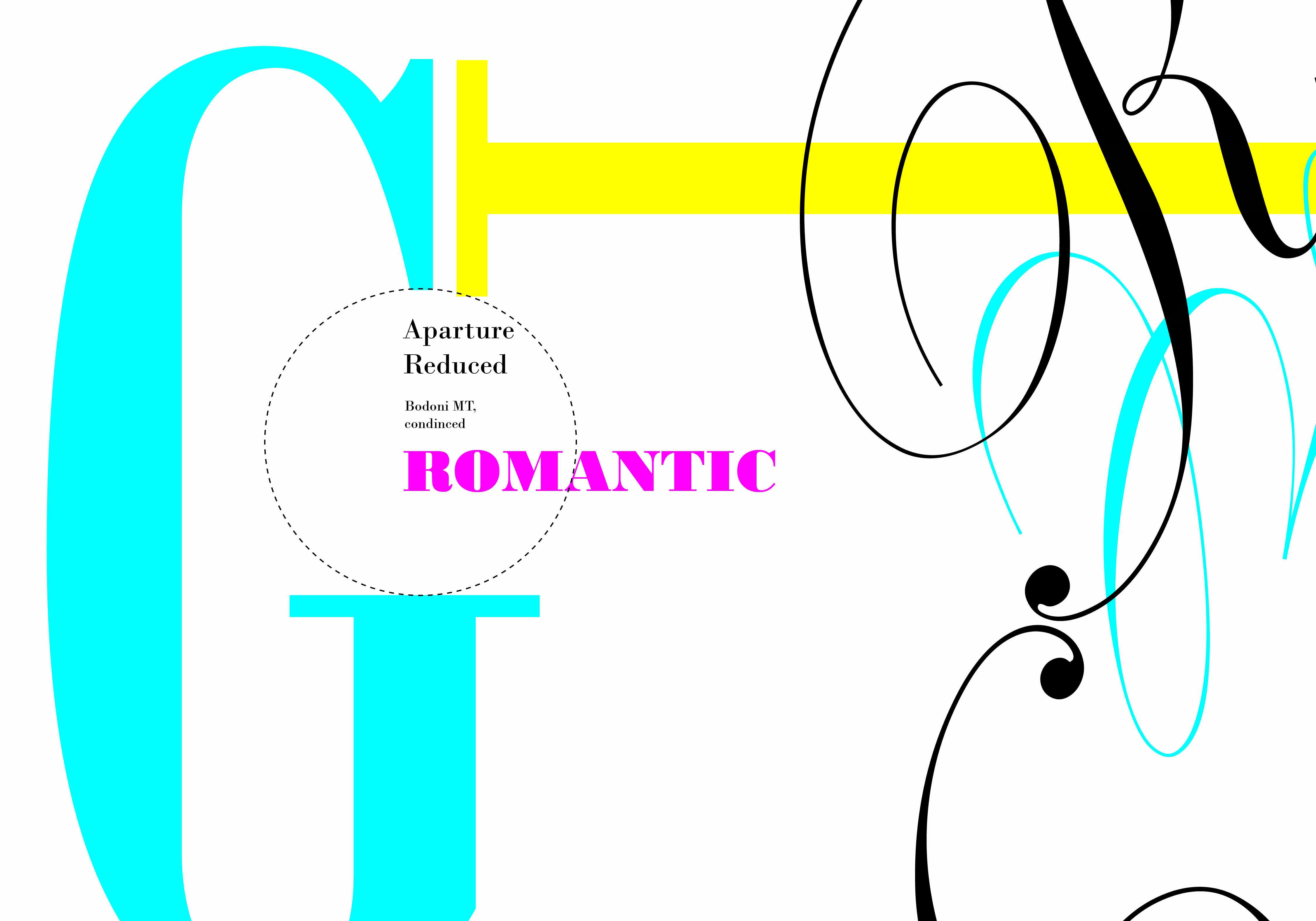
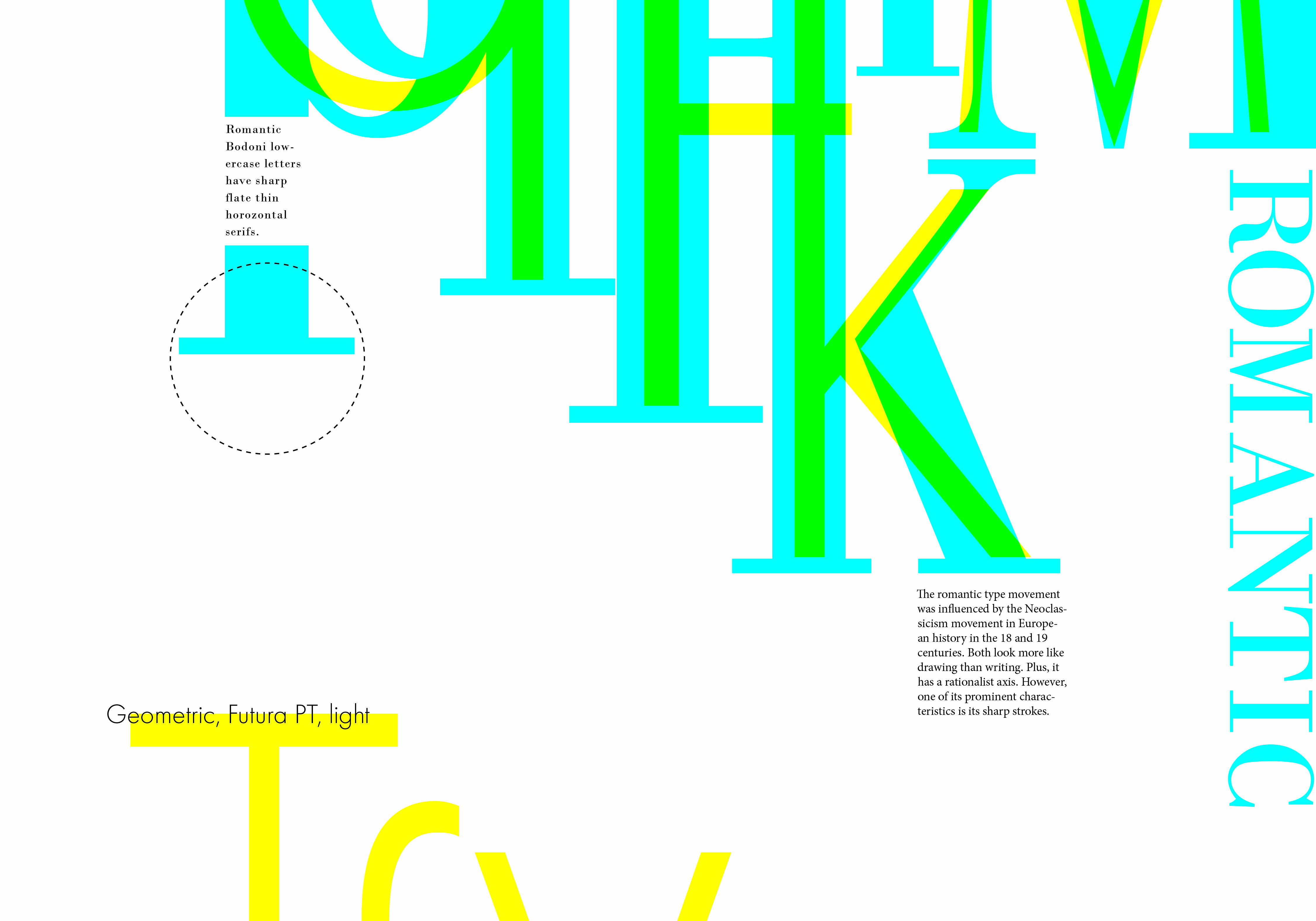
The Romantic spreads unpack Bodoni as a case study — its sharp serifs, its reduced apertures, its rounded terminals — each spread zooming into a different anatomical feature.

Bodoni spread — 1803-1812 with R, f, r letterforms
SpreadBodoni, Giambattista — Parma, Italy, 1803–1812
Large C letterform with curve analysis in CMYK
AnatomyRounded terminals
Aperture analysis — Bodoni MT condensed
AnatomyAperture reduced
Bodoni lowercase with flat thin horizontal serifs highlighted
AnatomySharp, flat, thin horizontal serifs

05 — The Geometric Spreads

Futura, constructed

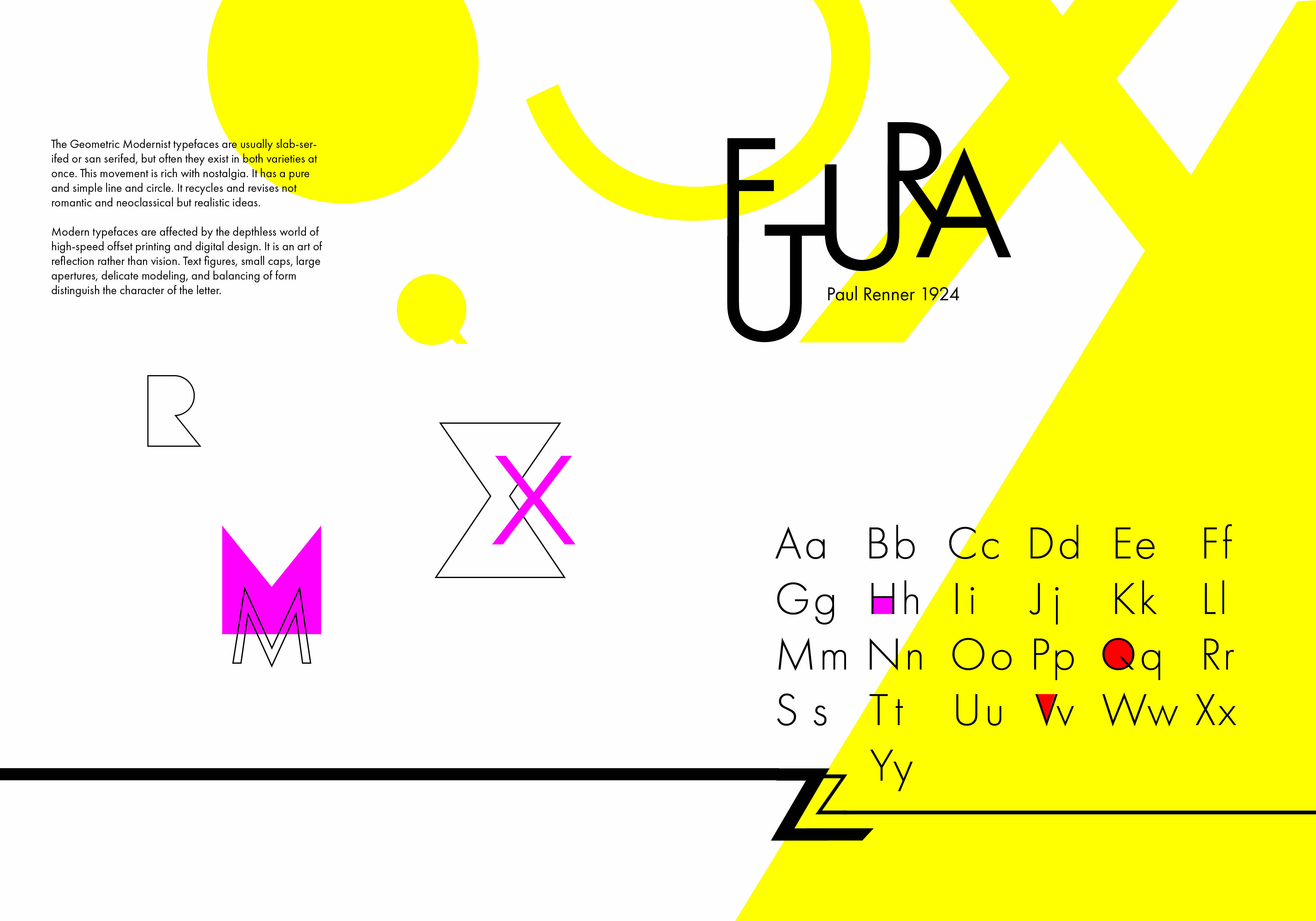
The Geometric spreads shift the visual language — sans-serif forms, pure circles, and a yellow field that replaces romantic cyan. Paul Renner's 1924 Futura stands as the movement's exemplar.

Futura spread — Paul Renner 1924, with full alphabet and M, X, Z letterforms
SpreadFutura — Paul Renner, 1924
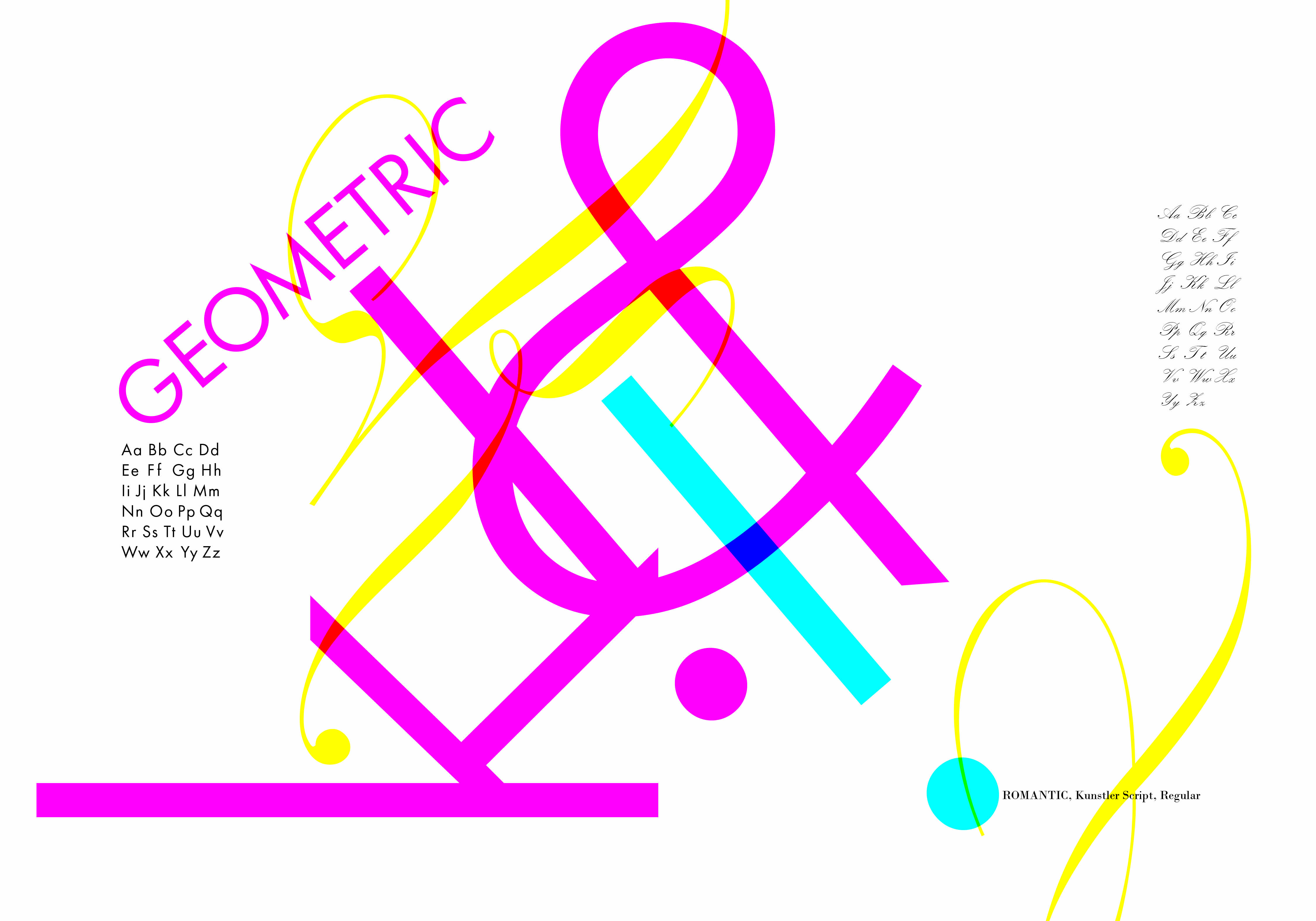
Geometric sans-serif ampersand overlayed with Kunstler script
Comparison SpreadGeometric ampersand vs. Kunstler Script

06 — Closing

Ornament & line

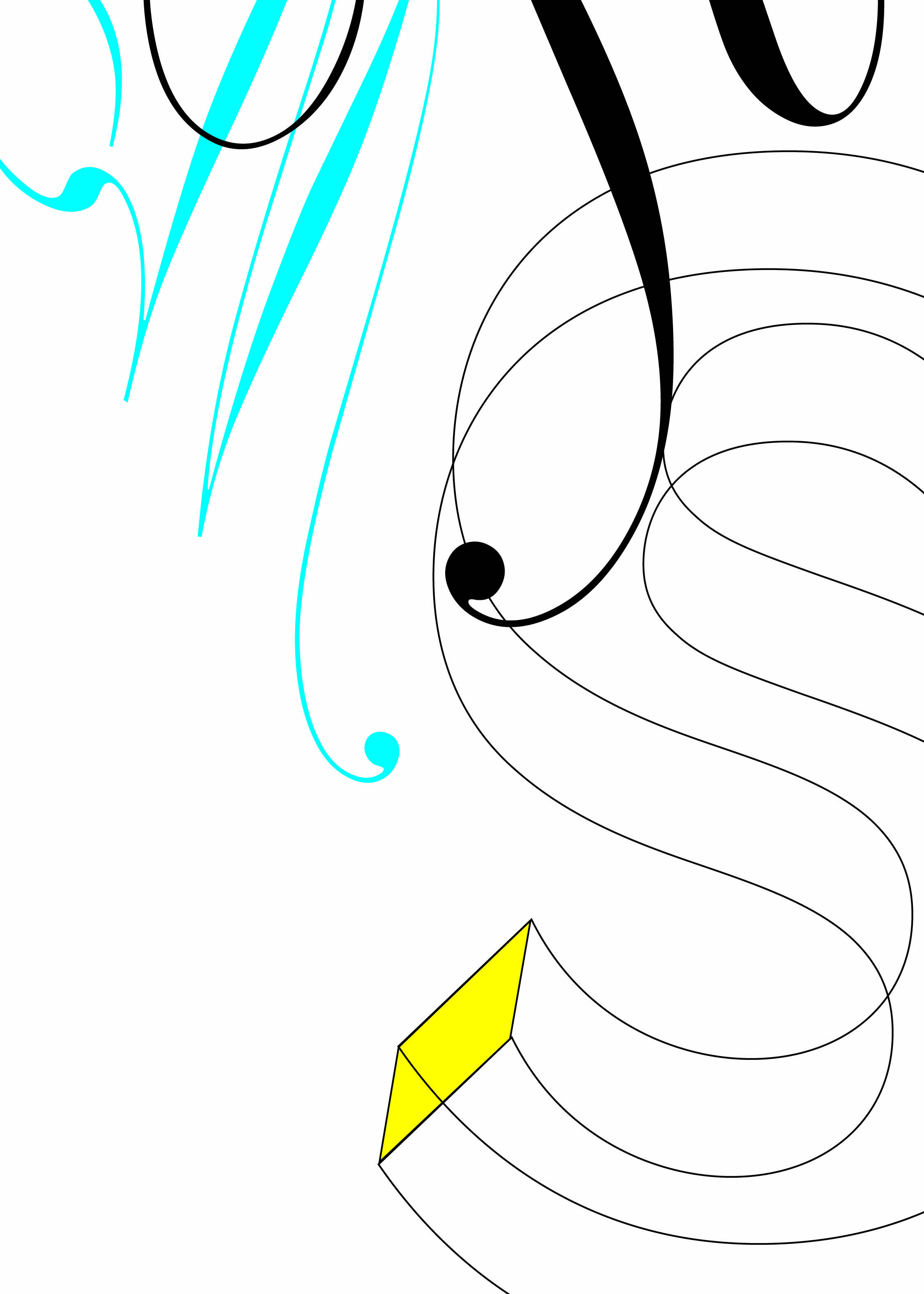
The final spread returns to the kinetic line of the cover — skeletal construction curves alongside calligraphic swashes — reminding the reader that classification is not the end of type, but the beginning of close looking.

Closing spread — ornamental swirls and skeletal construction lines
Closing SpreadConstruction curves and calligraphic details

07 — Design Approach

Swiss, modern, uncluttered

The design leans into modern, clean, minimalist Swiss typography. I was inspired by Mike Joyce, designer and owner of Stereotype Design in New York City — he redesigns vintage punk, hardcore, new wave, and indie rock show flyers into International Typographic Style posters. His project swissted.com holds a huge archive of those redesigns, and the discipline of his grids and color palettes shaped the way this book breathes.

Mike Joyce · Stereotype Design · swissted.com

08 — Project Details

Scope & craft

Type Publication design, typography book
Year 2022
Extent 16 pages, saddle-stitched
Print Method Riso print — CMYK layers
Subject Bringhurst type classifications
Typefaces Bodoni MT, Futura PT, Kunstler Script
Inspiration Mike Joyce · Swiss International Style
Role Designer & typographer

Explore More Work

See the full portfolio or discover other design & publication projects.

All Projects View Blending Lines