MFA Thesis · 2024

Blending Lines

Interactive Experiences with Arab Culture
Year 2024 Medium Interactive Installation Venue Gray Gallery, ECU Duration 2 hours opening

A bridge between Arab cultural heritage and contemporary interactive design — integrating Islamic geometric patterns and traditional Kufic calligraphy into immersive installations that invite visitors to move, touch, and respond.

Master of Fine Arts Thesis · East Carolina University · December 2024
01
The Concept

Tradition in Dialogue with Technology

This thesis examines the integration of Islamic geometric patterns and traditional Kufic calligraphy into contemporary interactive design. The work highlights the historical and cultural significance of Islamic geometric patterns as a cornerstone of Arab identity, while exploring the intellectual and spiritual depth embodied by traditional Kufic calligraphy.

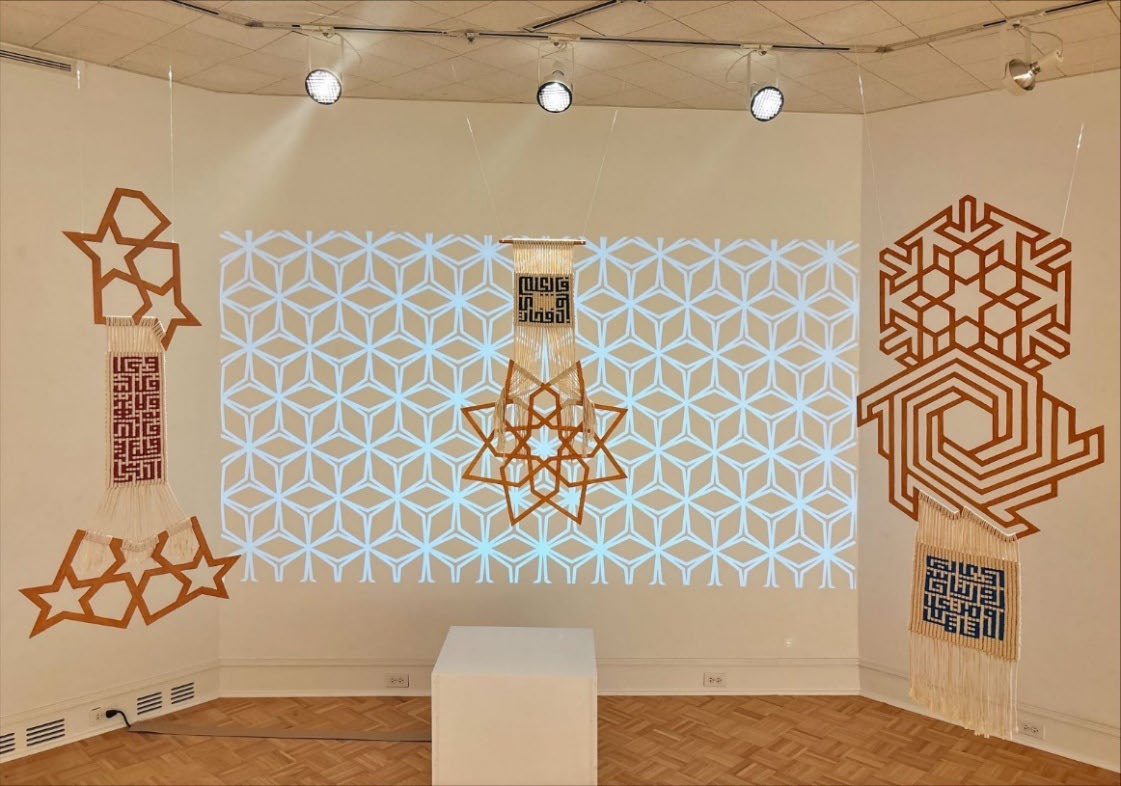
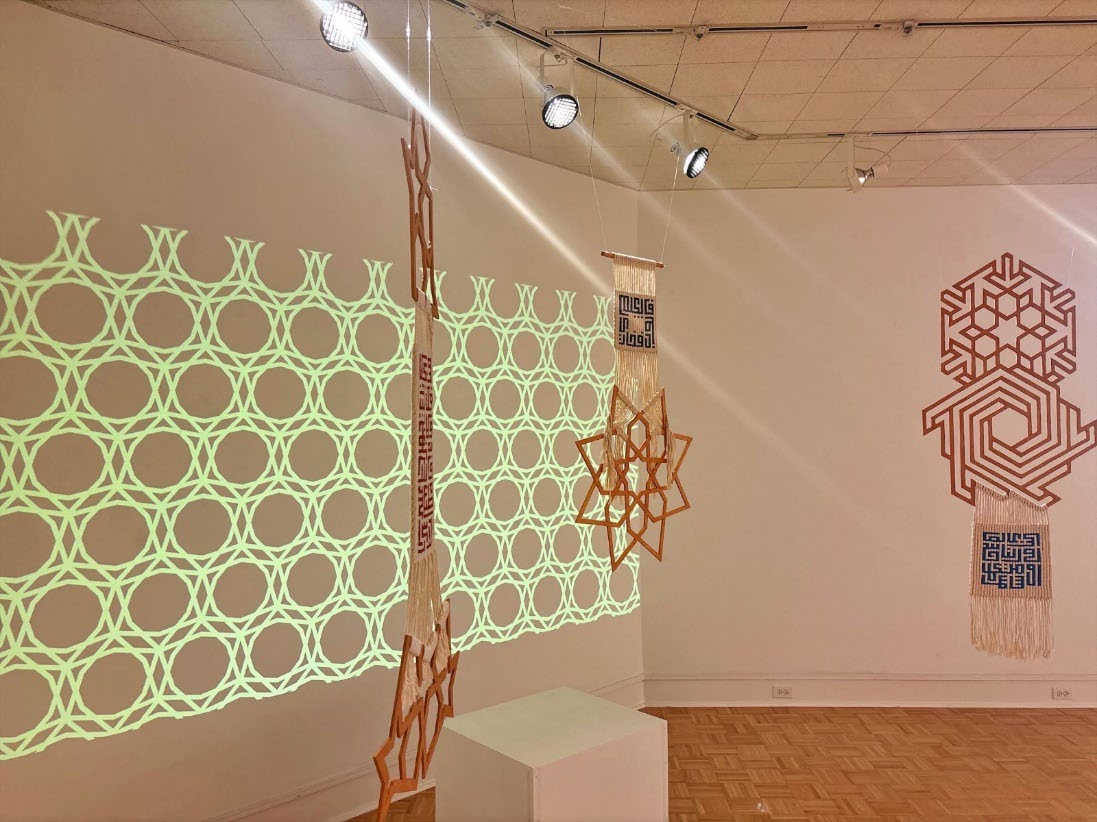
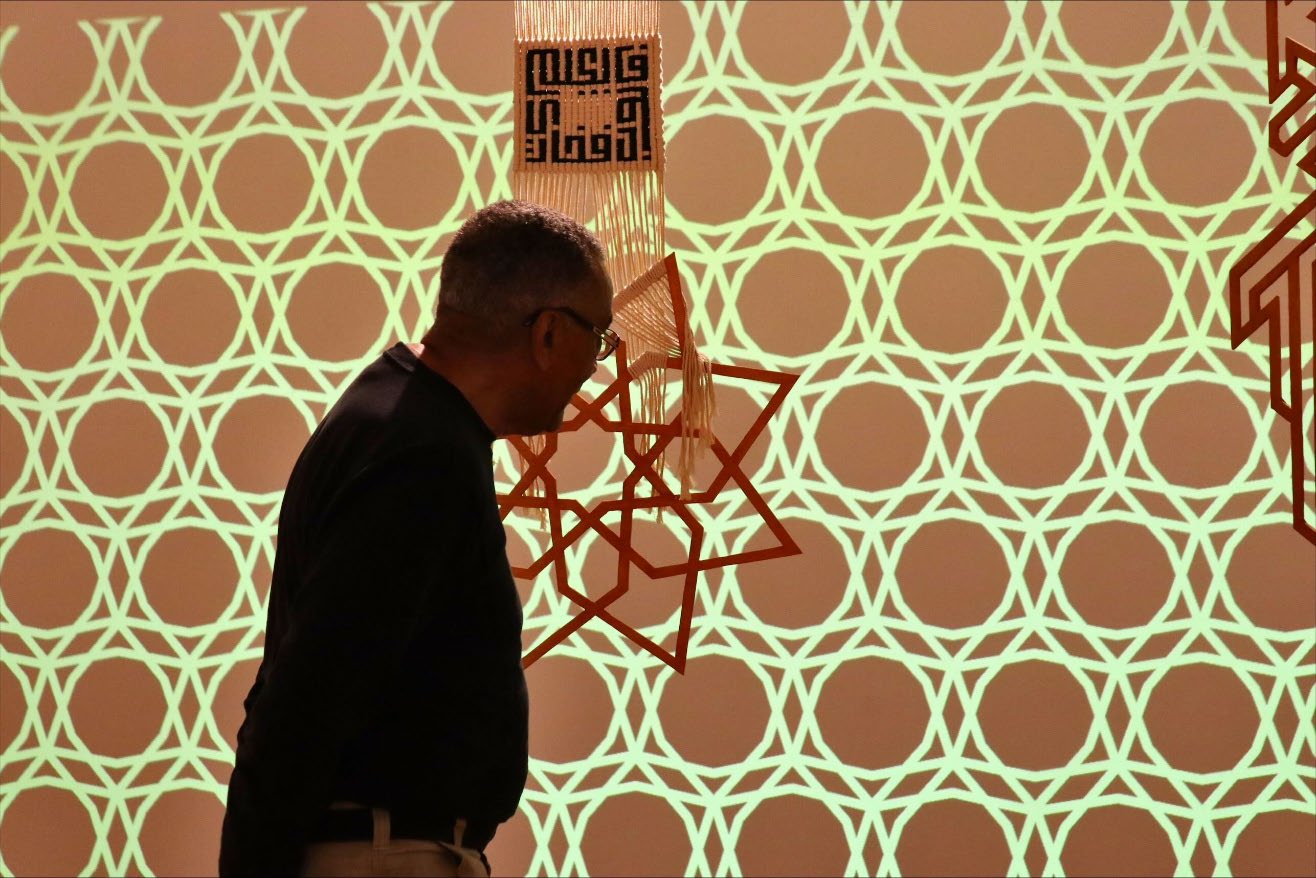
By bridging Arab cultural heritage with modern design practices, the work seeks to foster audience engagement and increase awareness of this rich culture and history. The thesis culminates in an immersive experience that blends physical and digital installations — three hand-crafted wooden geometric motifs integrated with Kufic calligraphy written in macramé cords, complemented by projection-based digital installations that respond to visitors' movements through the space.

The wood and cotton cords demonstrate the Arab appreciation of natural materials, as nature has been the primary source of inspiration in the Arab world. The digital installations complement this tradition by using projection, light, and patterns to display large-scale graphics on an adjacent wall — creating a living dialogue between heritage and innovation.
02

Three Lines of Inquiry

i.

How can digital technologies and tools effectively create immersive experiences that showcase traditional Islamic geometric patterns and Kufic calligraphy?

ii.

What are the challenges and opportunities in integrating tangible formats with digital interactive installations?

iii.

How do audiences respond to traditional Arabic design elements when paired with contemporary interactive technology in a cultural context?

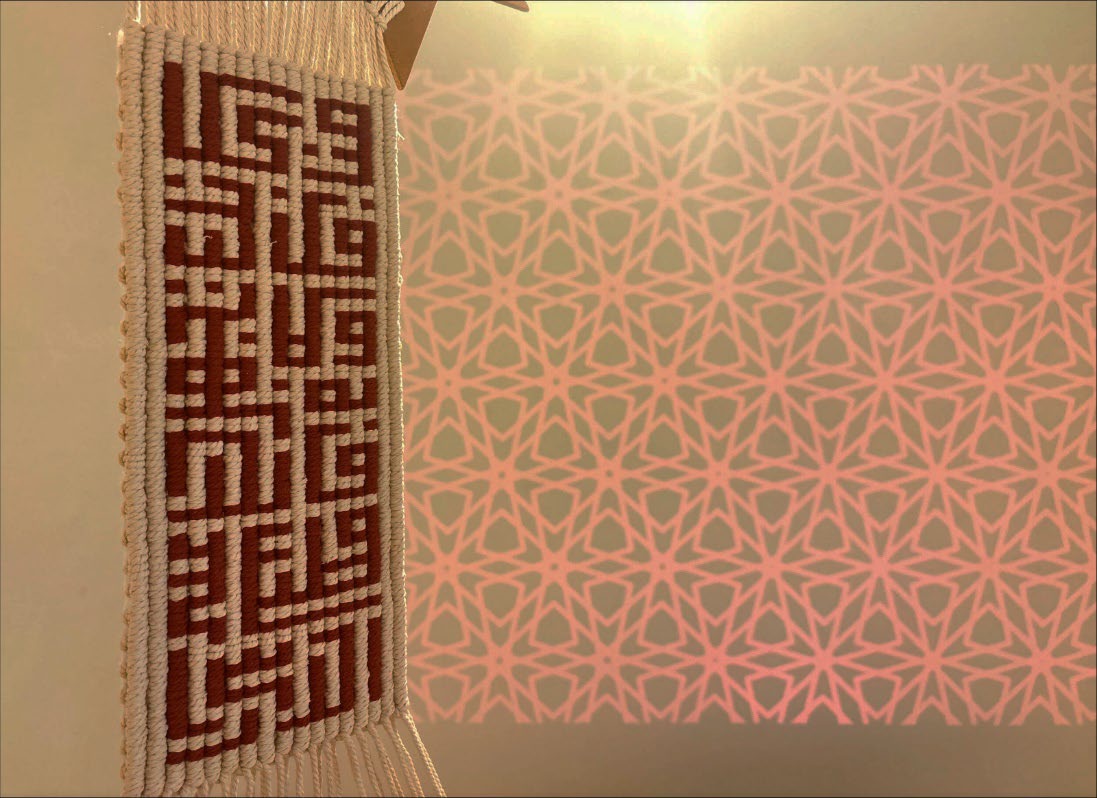
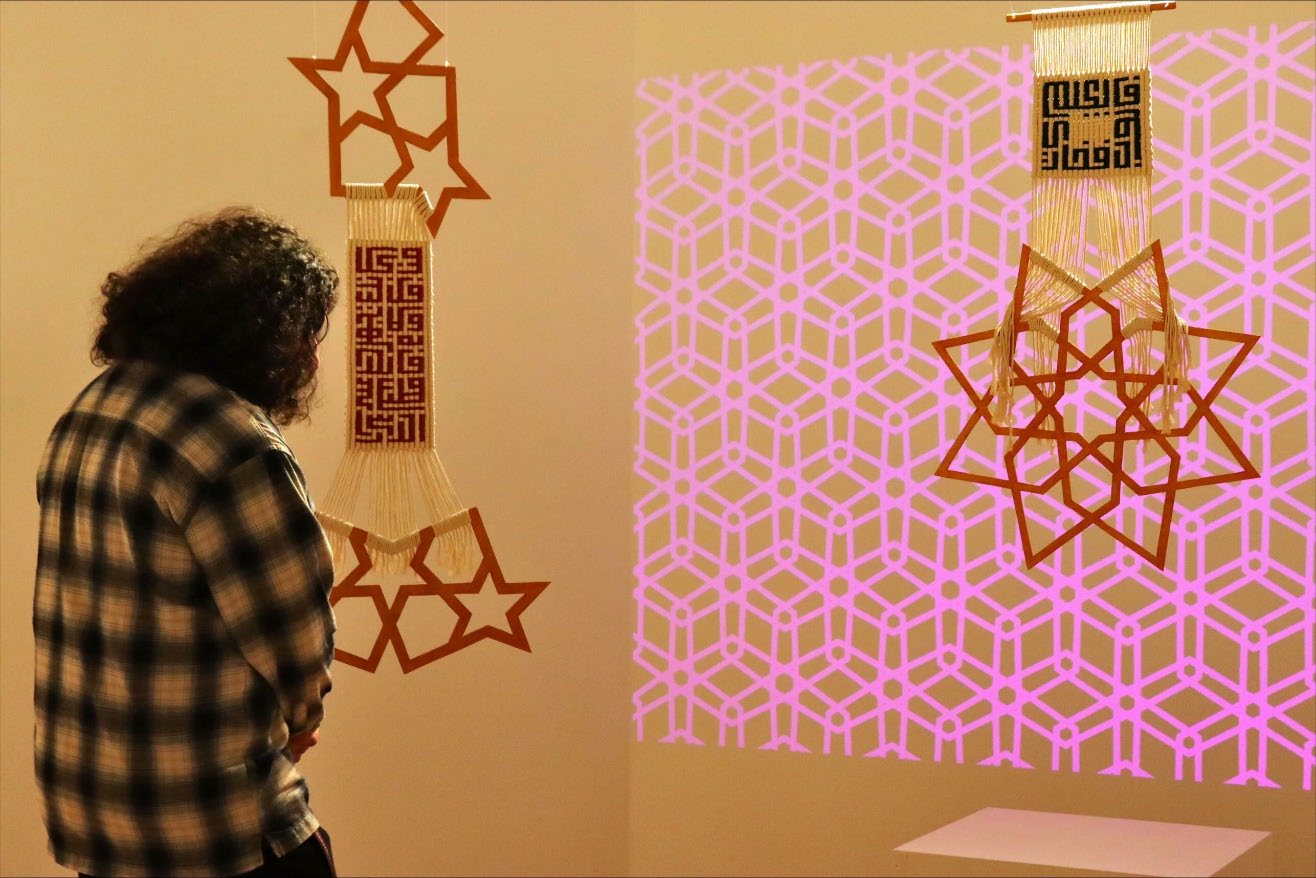
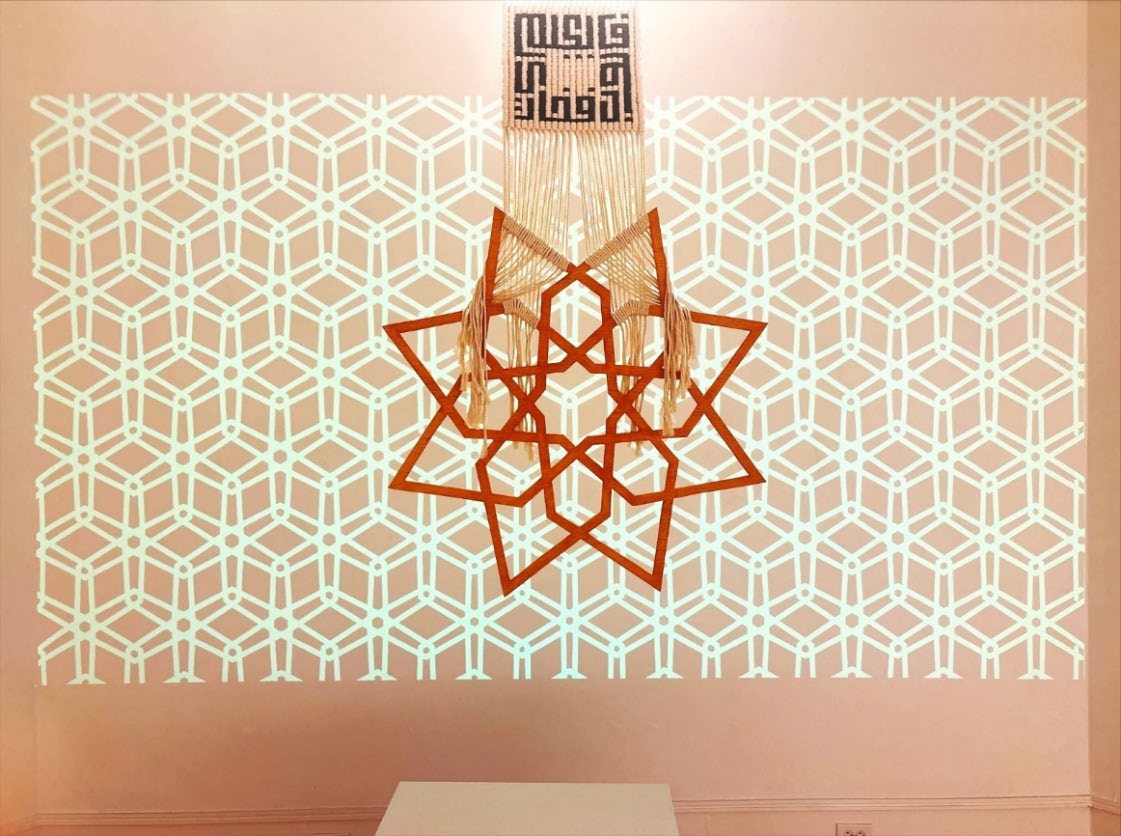
Five-fold geometric piece with pink projection
03
The Handcrafted Installations

Three Patterns, Three Divisions of the Circle

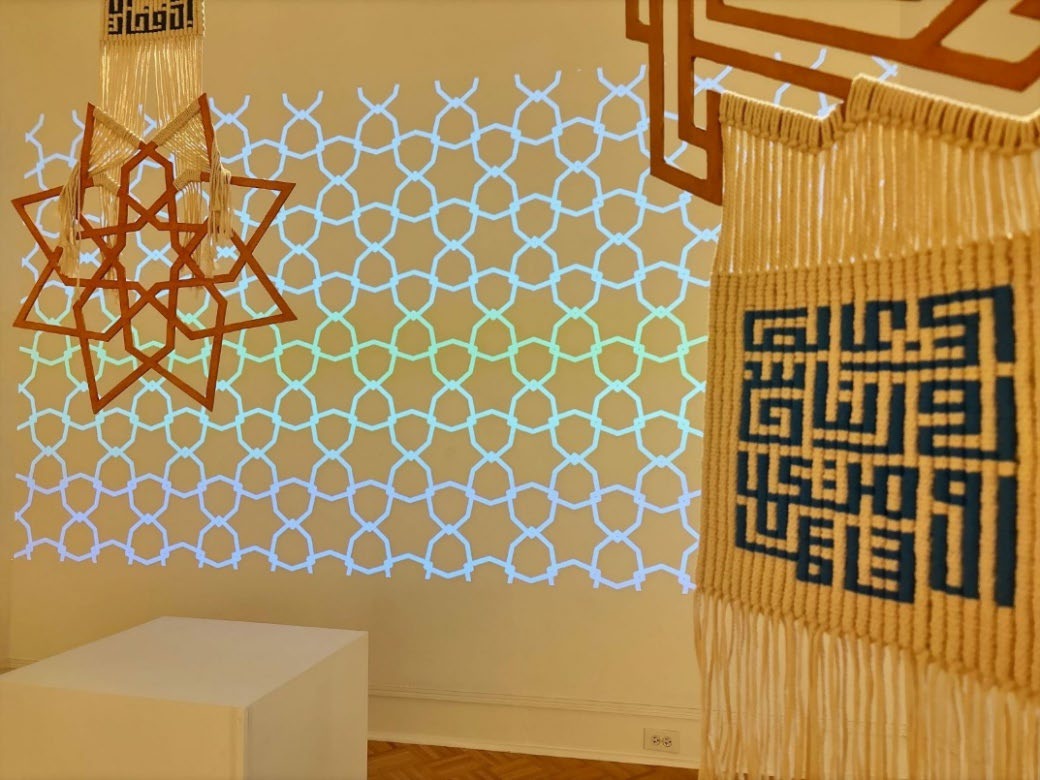
The physical work consists of three pieces made from quarter-inch plywood, each representing one of the three main categories of Islamic geometric patterns. Each wooden motif is paired with macramé pixel knots that render Kufic geometric calligraphy — the tactile, three-dimensional form of handcrafted Arabic script meeting the precision of geometric tradition.

Following the mathematical foundations described by Eric Broug, all Islamic geometric patterns begin with a circle. How many times you divide that circle determines the pattern: four, five, or six equal sections. Each division gives rise to a distinct visual language.

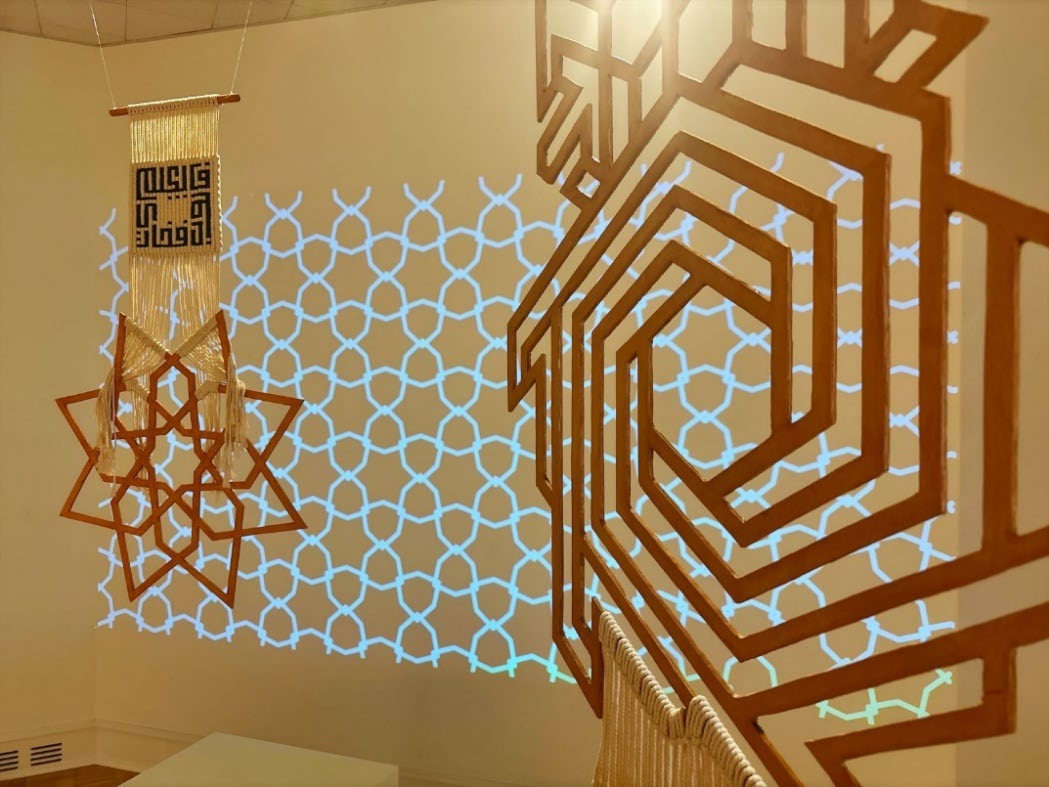
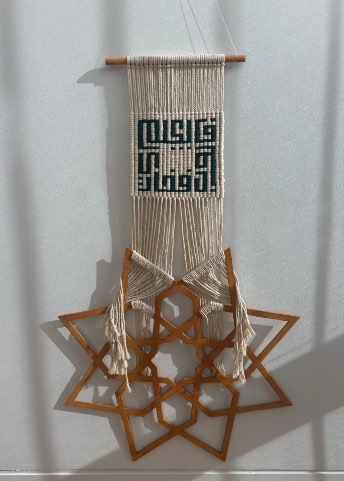
Four-fold geometric wooden motif
Plate II

Four-Fold

The circle divided into four equal sections — a foundation for octagonal and eight-pointed star compositions. Paired with macramé Kufic script from the opening line of Ibn al-Wardi's poem: "Be a scholar among people, or a learner, or a listener."

Five-fold geometric wooden motif
Plate III

Five-Fold

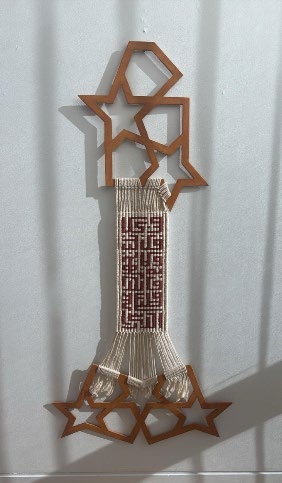
The rarer fivefold symmetry — historically requiring the most mathematical sophistication. Features the poem's second line: "For knowledge is a garment of pride." The star form suspends between two calligraphic anchors.

Six-fold geometric wooden motif
Plate IV

Six-Fold

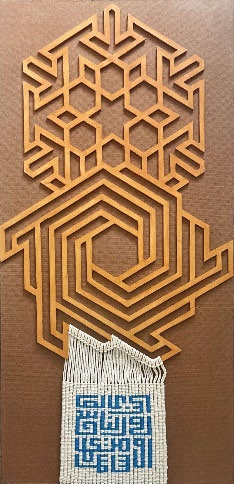
Hexagonal symmetry — the most prevalent in historical Islamic tilework. The interlocking hexagons dissolve into a spiraling labyrinth, carrying the final verse: "From every art, take, and do not be ignorant of it."

04

A Scholar's Invocation

The macramé knots render verses from Ibn al-Wardi's 14th-century poem Be a Scholar Among People or a Learner — a meditation on lifelong learning from a Mamluk-era Arab scholar.

قصيدة: كن عالمًا في الناس أو متعلمًا
قال ابن الوردي:
كنْ عالمًا في الناسِ أو متعلمًّا أو سامعًا فالعلمُ ثوبُ فخارِ
منْ كلِّ فنٍّ خذْ ولا تجهلْ به فالحرُّ مطَّلعٌ على الأسرار
"Be a scholar among people, or a learner, or a listener,
for knowledge is a garment of pride.
From every art, take, and do not be ignorant of it,
for the free man is privy to secrets."
— Ibn al-Wardi (c. 1292–1349)
05

When Tradition Responds

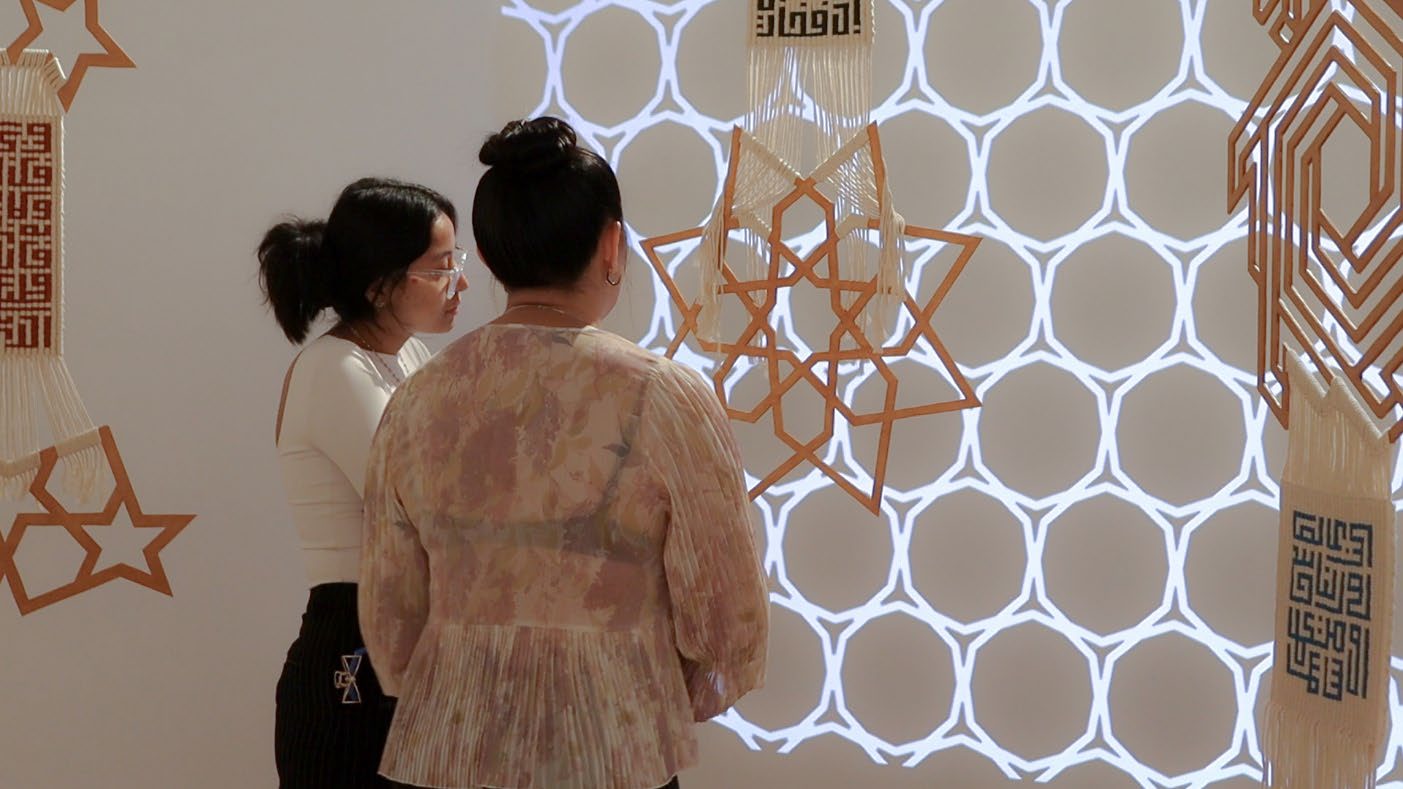
The three physical installations are accompanied by a digital sensory projection that creates a living dialogue between tradition and modern interpretation. Ultrasonic sensors measure the distance between visitors and each of the three installations. As people approach the wooden and macramé designs, the projected patterns shift in shape and color — symbolizing how tradition itself evolves when faced with fresh perspectives.

Each of the three sensors influences one color channel — blue, green, or red — so visitors essentially paint the wall through their movement, collectively composing an ever-shifting geometric landscape that honors the mathematical beauty of Islamic tilework while responding to contemporary presence.

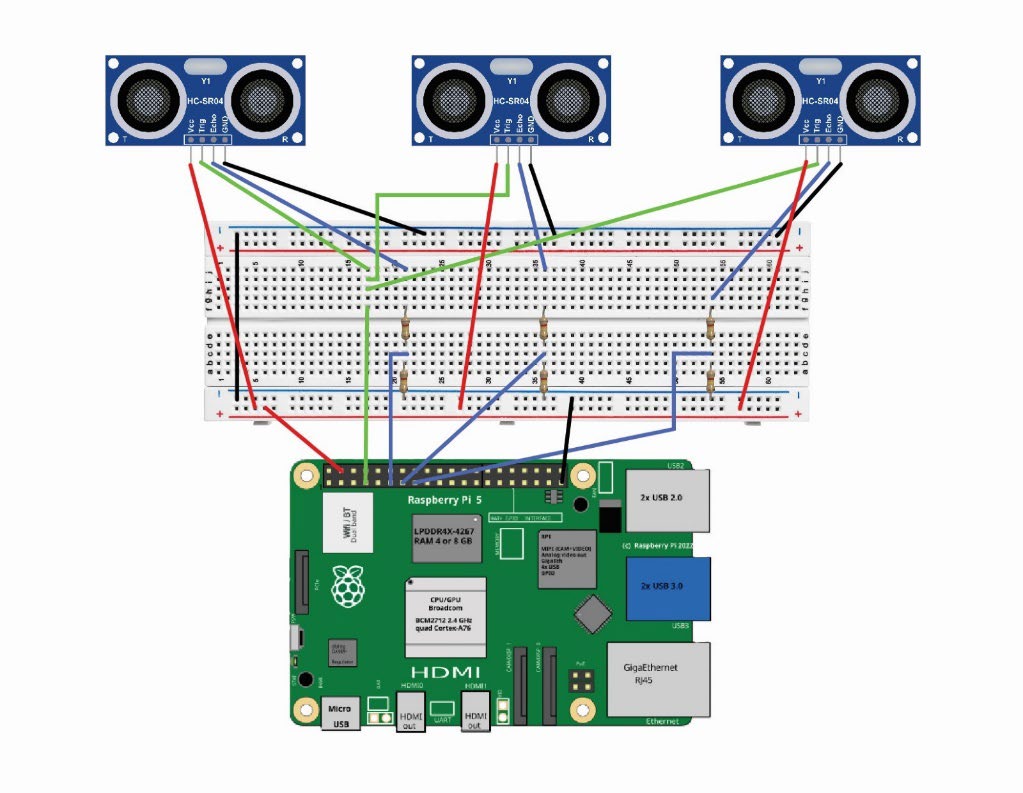
Raspberry Pi 5 wiring diagram with three HC-SR04 ultrasonic sensors
Plate V · Raspberry Pi 5 connecting to three ultrasonic sensors
  • Processor Raspberry Pi 5 — 64-bit quad-core Arm Cortex-A76 at 2.4 GHz, with 800 MHz VideoCore VII GPU supporting dual 4Kp60 display output
  • Sensors Three HC-SR04 ultrasonic distance sensors — non-contact measurement from 2 cm to 400 cm with up to 3 mm accuracy
  • Software p5.js library in Visual Studio Code, with a Python 3 script processing sensor data and mapping it to dynamic color channels
  • Display Short-throw projector mounted for wall-scale projection from minimal distance
  • Audio Oud composition "Flower Madeo" by Sogabe — blending traditional Arab instrumentation with contemporary phrasing
  • Inspiration Daniel Shiffman's Islamic star pattern tutorials on The Coding Train, extended into morphing, sensor-driven designs
07

The Work in Motion

Video captures the full dimensional experience — the projection shifting as visitors move through the space, the physical pieces catching and refracting the light, the soundscape of the oud weaving through it all.

08
Audience Response

The Work Comes Alive in the Encounter

Over the two-hour opening, observation and direct conversations with more than twenty visitors revealed a consistent pattern — curiosity, sustained engagement, and genuine connection with a cultural tradition many had not previously encountered.

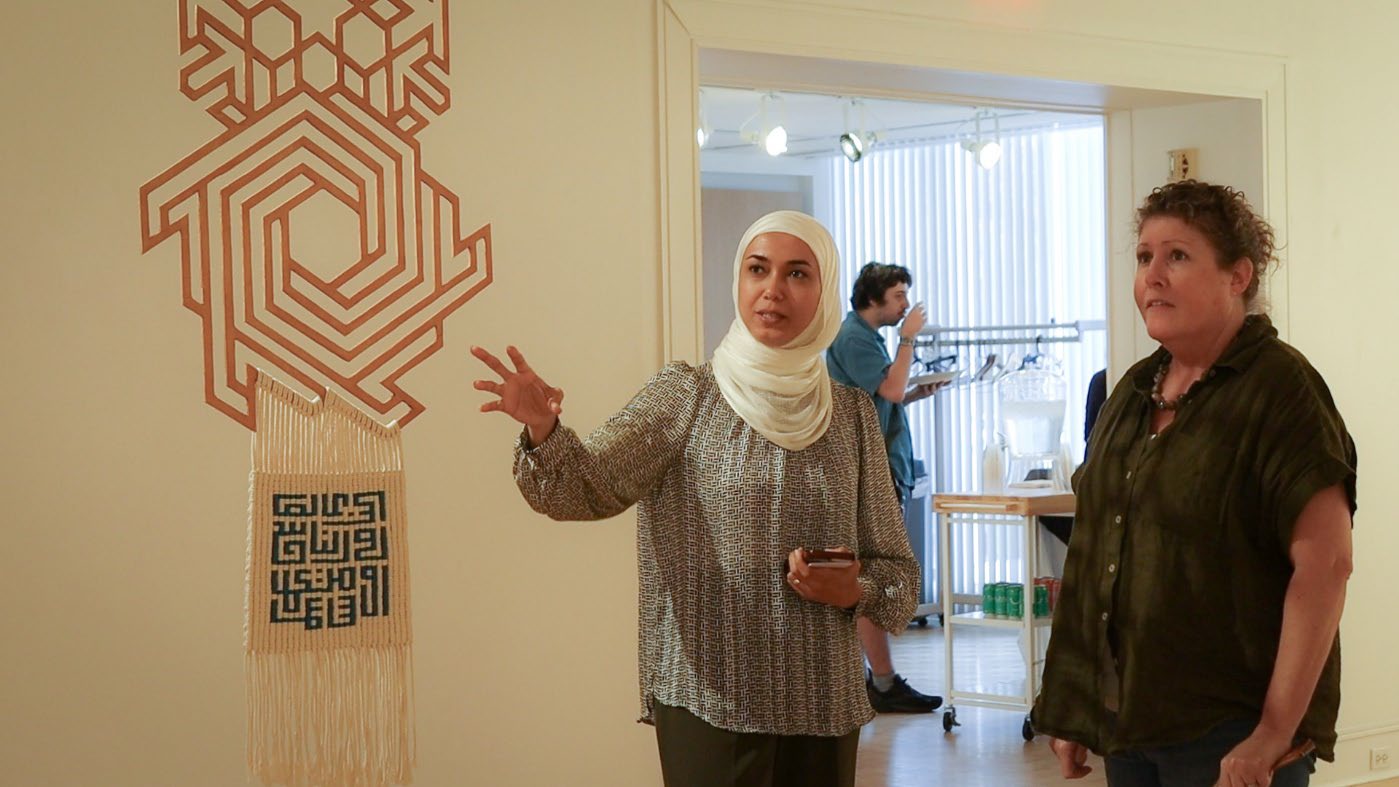
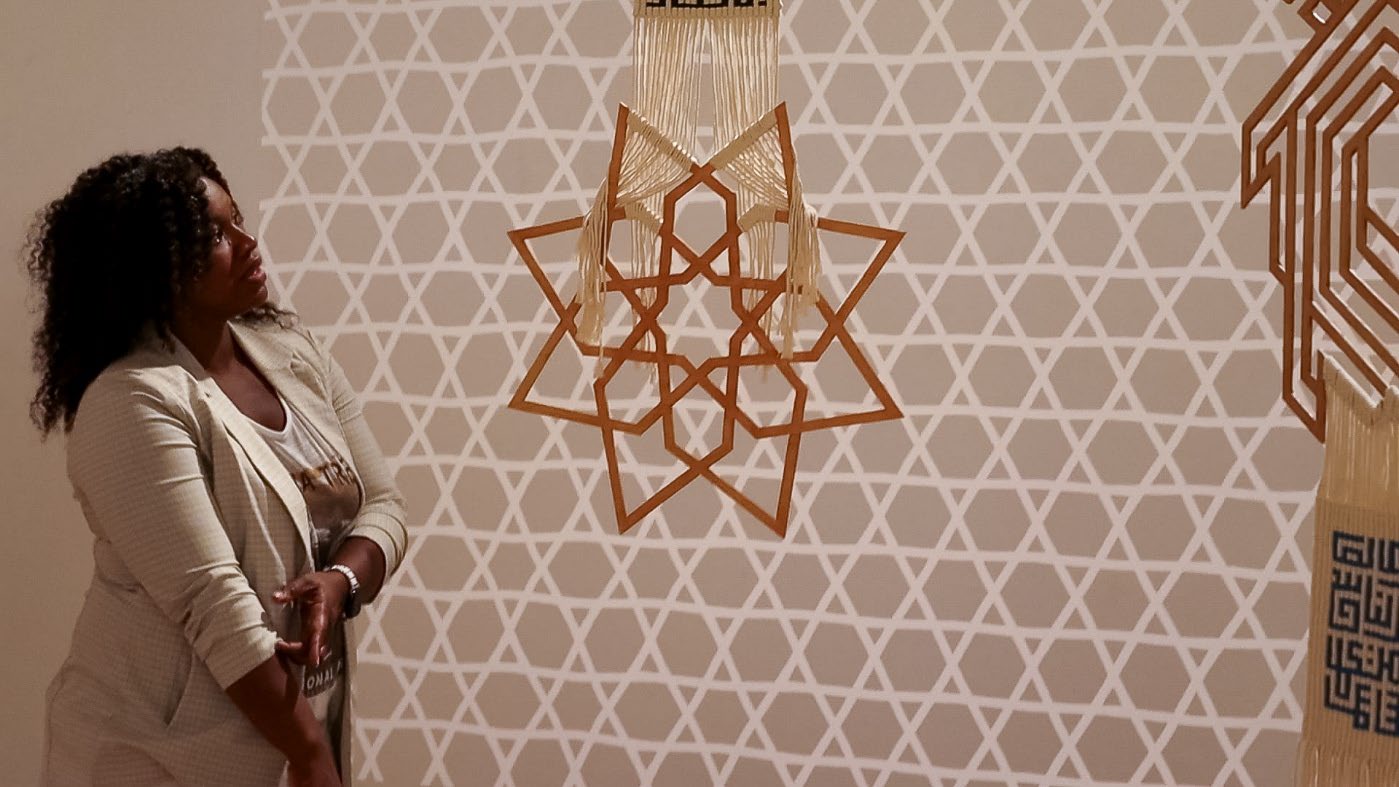
Amal Abdalla explaining the work to a visitor
The artist in dialogue with a visitor

One Visitor's Response

"This combination successfully drew attention to the cultural significance of Arab and Islamic designs."

Both verbal and non-verbal feedback — smiles, extended interactions, phones raised to capture the shifting patterns — underscored the effectiveness of blending tactile and digital media to create genuinely immersive cross-cultural encounters.

Observation

Visitors were intrigued as they approached the physical installations made of wood and macramé, often reacting positively to the responsive digital patterns. The act of moving through the space — triggering the sensors without being told how — produced a sense of delighted discovery.

Conversation

More than twenty direct conversations, each lasting several minutes, provided qualitative feedback on visitors' experiences, their impressions of the installations, and their engagement with Arab culture through the exhibition.

09
Looking Forward

Future Directions

Using traditional elements of Islamic and Arabic designs and presenting them through a contemporary interactive exhibition has proven to be an effective way to showcase Arab culture and foster participation from a diverse, open-minded audience.

This exhibition has inspired new directions in my practice — designs that engage all human senses and stimulate curiosity, integrating electronic sensors into artwork to create fully immersive, interactive experiences. I am passionate about promoting Arab culture and learning about other cultures, and I aim to create interactive designs that merge various art forms and cultural elements to bridge gaps between people and foster understanding.

In my future work, I intend to deepen my exploration of different cultures and create a mature artistic dialogue that celebrates and connects our differences.

Read the Full Thesis

The complete MFA thesis document contains the full historical context, literature review, methodology, and references for the project.

Download PDF Contact the Artist