A Visual Interactive Book for Art Education — a proof-of-concept redesign of the Egyptian middle-school Art Education textbook as an interactive digital publication, built to solve a real classroom problem with real images, video, and games.
The project began with a conversation with a representative from the Egyptian Ministry of Education about the state of Art Education in middle schools. Two problems surfaced, and both pointed at the same thing: the book.
Since 2005, the Ministry has stopped printing the Art Education textbook because of budget constraints — while maintaining that the current curriculum is fine. For nearly a decade, teachers and students had been working from old copies run through black-and-white photocopiers. The subject matter is visual. The photocopies were not.
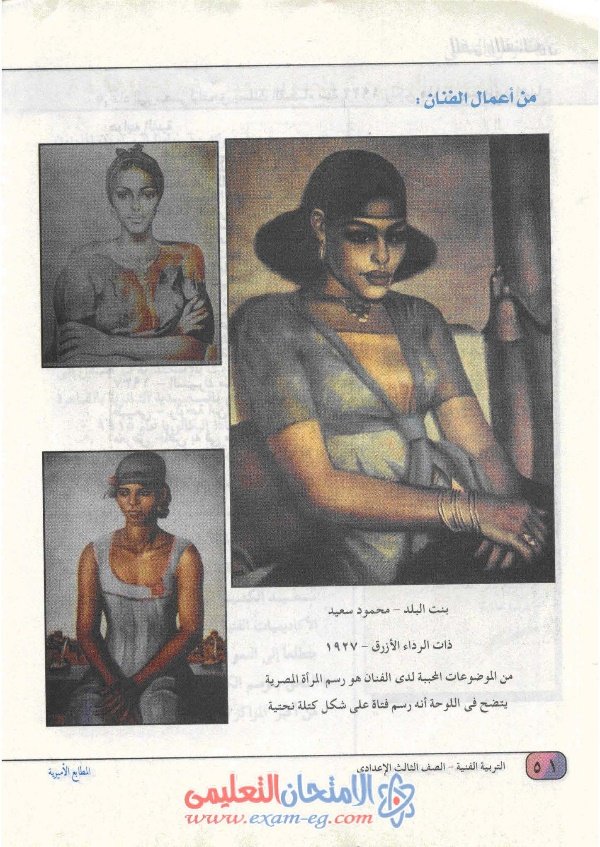
A visual discipline was being taught from low-resolution black-and-white photocopies. Students couldn't see the colour, the brushwork, or the detail of the paintings they were being asked to study.
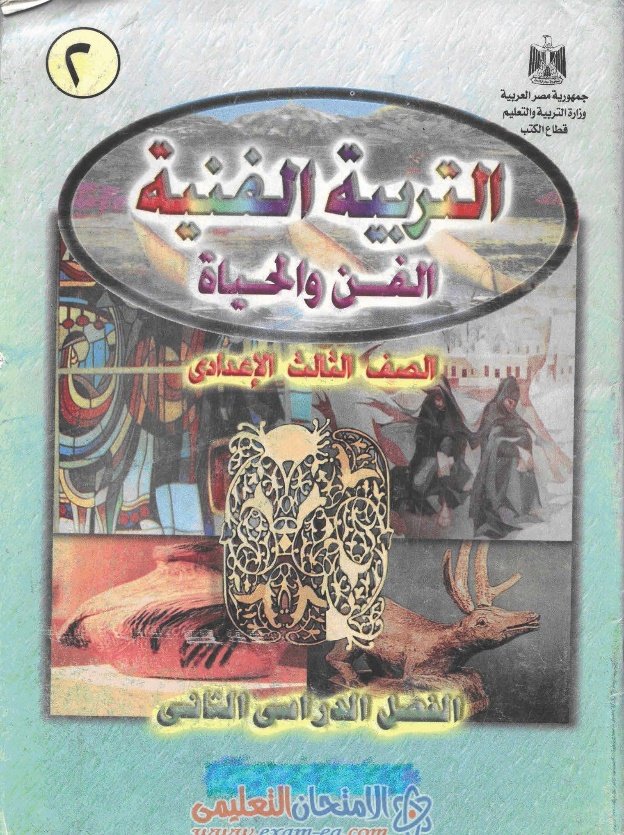
The original pages stacked images on top of each other, scattered text, and left large empty areas. Students weren't engaging — not because the subject wasn't interesting, but because the design had stopped doing its job.
Instead of redesigning the whole book, the project took a single chapter — the one on the renowned Egyptian painter Mahmoud Said (1897–1964) — and rebuilt it as a proof of concept. The chapter was redesigned from the ground up: new cover, new grid, real high-resolution images of the paintings, and interactive components layered on top.
The format matters as much as the content. A digital book removes the printing cost that killed the original, which means it can actually reach students. And because it's digital, it can do things paper can't: zoom into a brushstroke, play a short documentary, drop into a drag-and-drop game to recall what was just taught.
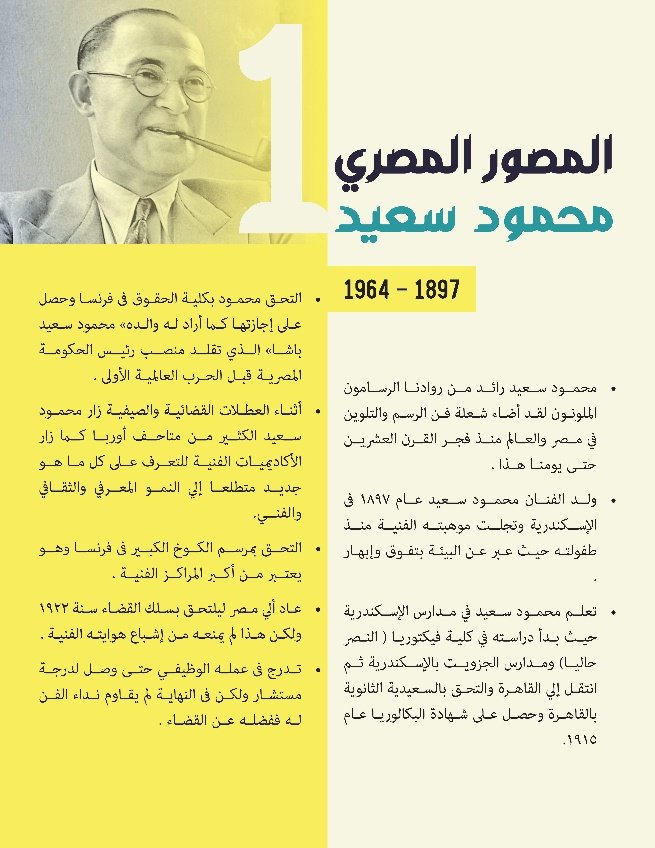
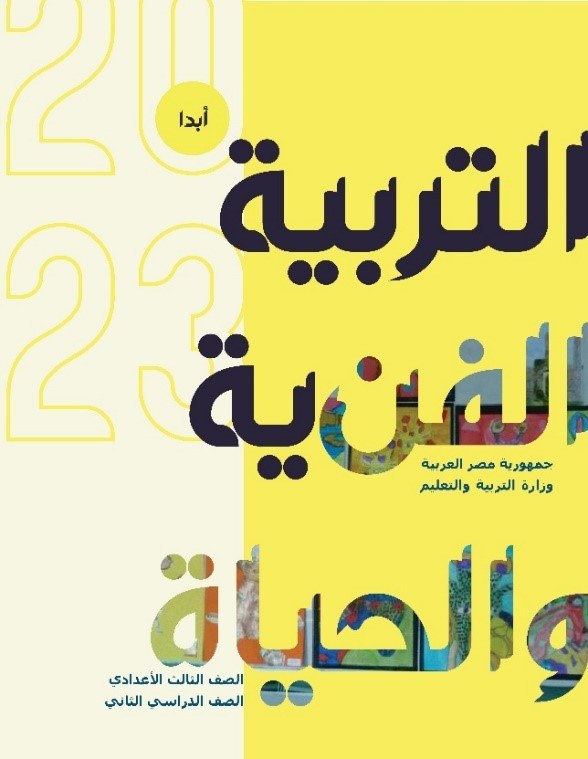
Two pairs of pages from the same chapter — the original textbook on the left, the VIBE redesign on the right. The content is the same. The experience isn't.
Original cover — multiple images stacked on top of each other, no clear hierarchy, no invitation to open the book.
VIBE cover — a single typographic idea. Arabic letterforms become windows onto the paintings inside, tied together with the year as counterpoint.
Original "Works of the Artist" page — washed-out colour, overlapping frames, hard to read.
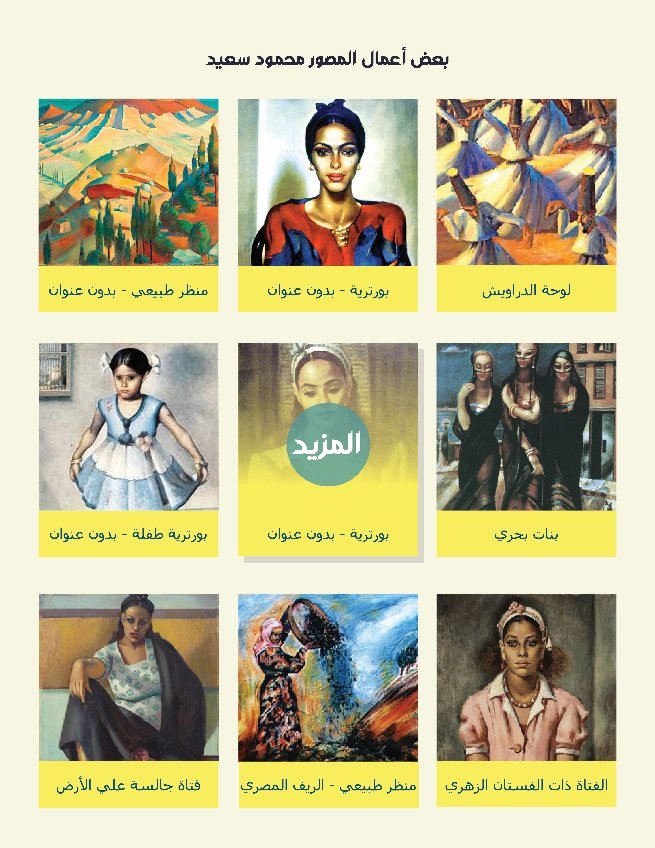
VIBE — a grid of high-resolution paintings, each labelled, with a "More" button linking to an extended gallery.
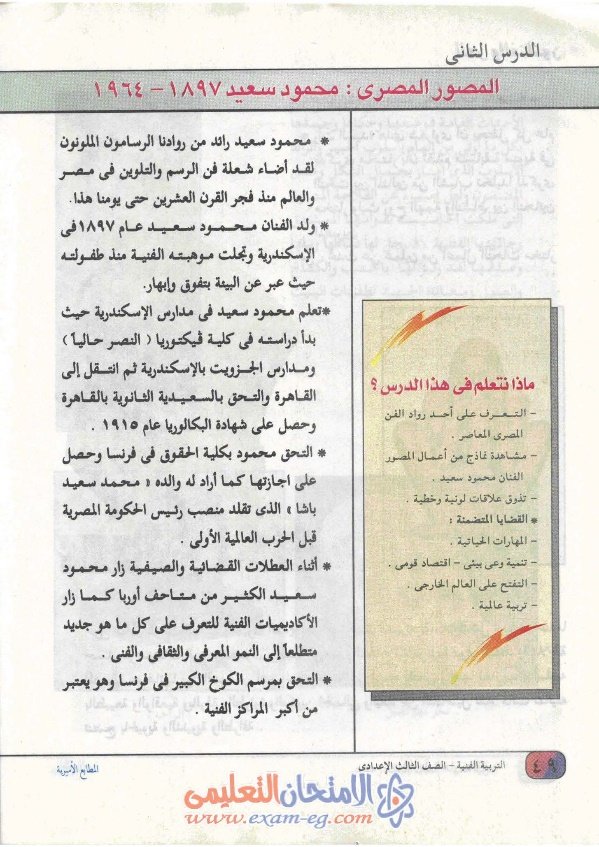
Original biography — dense block of text, decorative callout pinned to the corner.
VIBE — the same biographical text, reorganised into bullets with a portrait, a lesson number, and dates as an anchor.
Every interactive component was chosen against one question: does this help a twelve-year-old remember what they just read?
Four control buttons let students jump directly to any of the four lessons in the chapter.
Every painting can be zoomed in or out. Tapping a work opens additional context about the piece.
Short video clips accompany the lessons — each opens in its own window and can be replayed on demand.
A secondary gallery hosts additional paintings by the featured artists that don't fit in the main chapter flow.
Recall-style activities ask students to match works to artists, periods, or techniques — turning review into play.
Simple drawing prompts let students practise the techniques they've just studied, directly inside the e-book.
Background music sits behind the cover and transitions; sound effects provide feedback on interactive elements.
Typography, reading direction, and layout are all designed around Arabic from the start — not retrofitted.
The prototype was evaluated by a panel of twenty-three art educators and book designers in Egypt, using an eight-criteria evaluation form that covered artistic value, screen design, colour, imagery, video, sound, text, and interactivity. Agreement between reviewers was calculated using Cooper's Equation.
The Dean of the Art Education Faculty at Minia University wrote a letter of recommendation and forwarded the project to the Egyptian Minister of Education, urging that the project's approach be considered in future textbook revisions — and that the idea be shared with neighbouring Arabic countries, not just Egypt.
— Project response summary, 2014See the full portfolio or discover other educational design projects.
All Projects View Balanced